
2026-08-19 · Frank Ramirez
Installing Residential EV Chargers Near Hemet Agricultural Zones
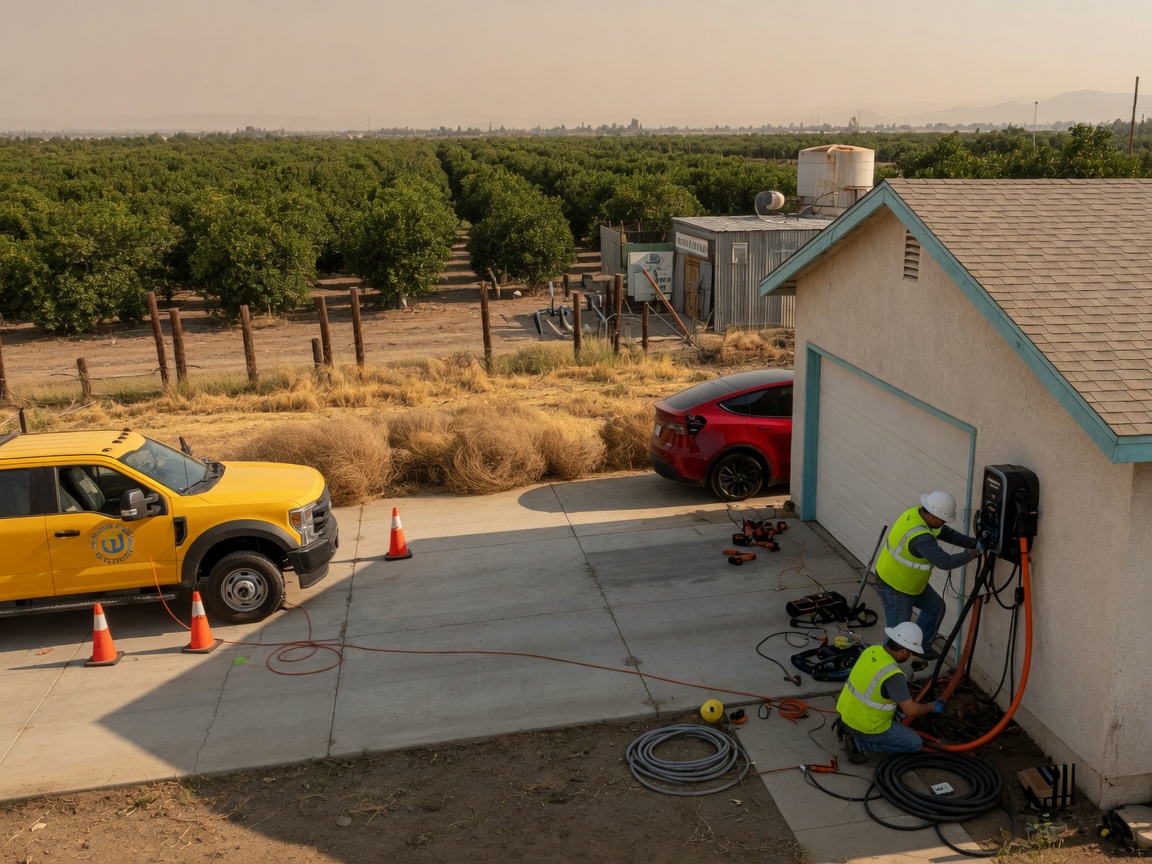
Installing residential EV chargers near Hemet agricultural zones requires first confirming the home's electrical panel capacity can handle a dedicated 40- or 50-amp circuit without overload, especially in older properties common throughout West Hemet and Ramona Hills where many homes predate modern EV demands.
Local Climate and Terrain Impacts on Charger Placement
Hemet's hot desert climate brings summer temperatures often exceeding 100 degrees, which accelerates wear on outdoor EV charger components if not rated for extreme heat and UV exposure. Agricultural zones add fine dust from nearby fields that can infiltrate connectors and reduce efficiency over time, while irrigation runoff in areas near Downtown Hemet creates occasional soil moisture that demands elevated mounting and sealed conduits. Installers typically position units on the shaded north side of homes or under carport structures to minimize direct sun, and they use corrosion-resistant hardware suited to Riverside County's variable conditions. Homes in East Hemet near Ramona Bowl often sit on sloped lots where trenching for underground runs must account for rocky soil and avoid existing irrigation lines. These factors extend typical install times by one to two days compared to urban settings in nearby San Jacinto or Menifee.
Assessing Panel Capacity in Agricultural-Area Homes
Many residences bordering Hemet's agricultural zones still rely on 100-amp or 150-amp panels installed decades ago, insufficient for simultaneous EV charging and household loads during peak summer use. Upgrading to a 200-amp panel becomes necessary in roughly half of pre-1980 homes in West Hemet to safely support Level 2 chargers drawing 7-11 kW. This upgrade also improves capacity for other high-draw appliances common in larger rural lots. Technicians check for aluminum wiring or undersized neutrals that appear frequently in Ramona Hills properties and recommend targeted replacements before charger work begins. Such assessments prevent nuisance trips and extend overall system lifespan in the region's mild winters when heating loads stay low but cooling demands stay high.
Step-by-Step Installation Process for Durability
- Site evaluation includes measuring distance from panel to charger location, noting any agricultural fencing or drainage paths.
- Permit submission follows City of Hemet requirements, covering load calculations and equipment specs.
- Trenching or conduit routing uses Schedule 40 PVC rated for direct burial to resist soil movement and moisture.
- Mounting hardware receives stainless steel fasteners and weatherproof enclosures to handle dust and heat cycles.
- Final testing verifies ground fault protection and communication with the vehicle under full load.
These steps account for the longer cable runs typical on agricultural-edge properties where garages sit farther from the street.
Ongoing Maintenance and Safety in Riverside County
Quarterly inspections of charger cables and seals help remove accumulated dust before it causes connection faults, a common issue in Hemet's farming surroundings. Homeowners should monitor for any signs of overheating during 95-plus degree days and schedule professional checks every 8-12 years or after major storms. Linking charger installation with Electrical Panel Upgrades often resolves capacity shortfalls in one project. Readers exploring older wiring concerns can review Checking for Outdated Wiring in Pre-1970 Hemet Homes while those needing permit details should consult Navigating City of Hemet Electrical Permit Requirements. Properties in nearby Temecula or Menifee share similar soil and climate considerations that influence long-term charger reliability.