
2026-08-19 · Frank Ramirez
Preparing Electrical Systems for Hemet Summer Heat Waves
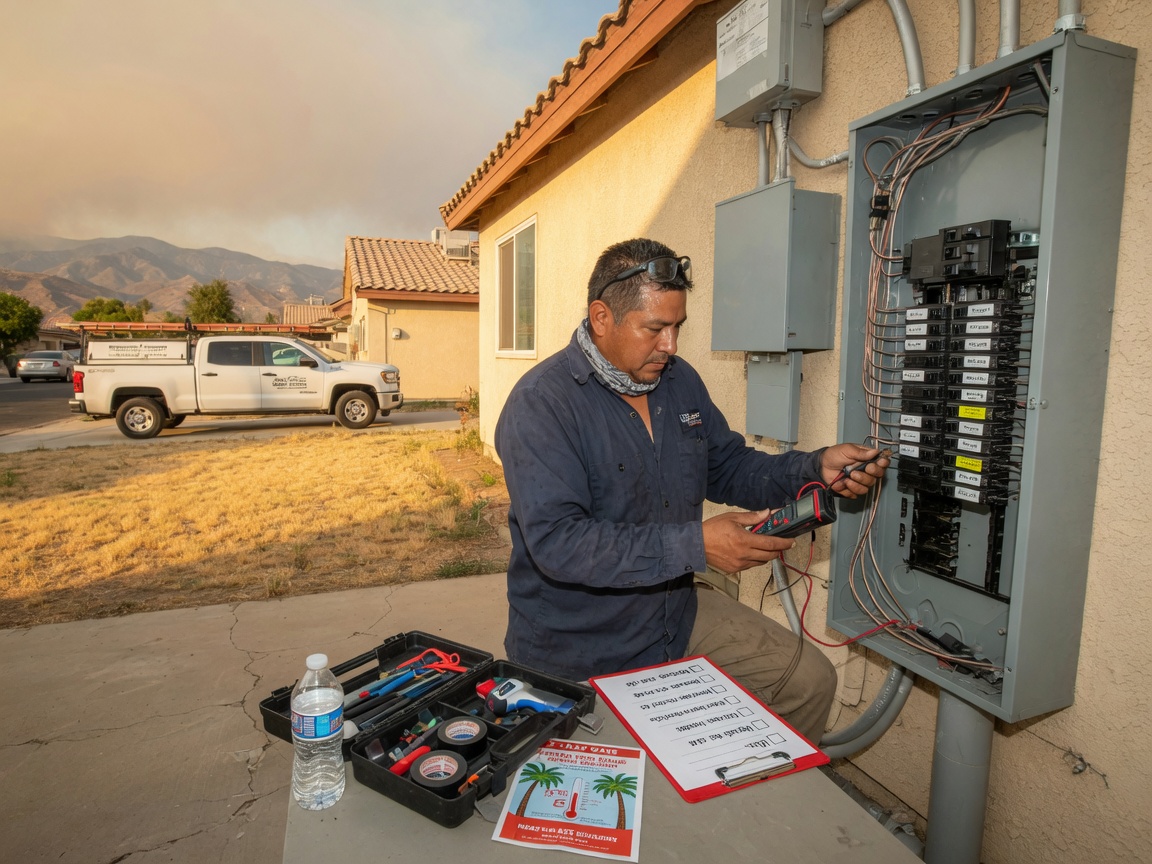
In Hemet’s hot desert climate, preparing electrical systems for summer heat waves starts with verifying that your main panel and branch circuits can sustain continuous high loads from air conditioners without overheating or tripping breakers during 100-plus degree stretches.
How Desert Heat Affects Panels and Wiring in Hemet Homes
Older homes in Downtown Hemet and West Hemet often contain 100-amp or 125-amp panels installed decades ago that now struggle when multiple window units or central AC systems run nonstop. Prolonged high temperatures around Diamond Valley Lake and Ramona Bowl areas accelerate insulation breakdown on wires, raising resistance and heat buildup inside walls. Mild winters give little relief from cumulative wear, so panels in East Hemet properties frequently show signs of thermal stress by late spring. Homeowners notice warm breaker handles or buzzing sounds first during early heat spells. Checking torque on lugs and scanning for discoloration prevents failures when demand peaks in July and August.
Inspecting Circuits That Serve Air Conditioning Equipment
Start by locating every circuit feeding condensers and air handlers, then test voltage drop under load during the coolest part of the day before heat arrives. In Riverside County, many 40- and 50-amp circuits installed for older units now carry newer high-efficiency models that still draw heavy startup current. Loose terminations at disconnects outside in direct sun compound the problem. Use an infrared thermometer to spot connections running more than 20 degrees above ambient. If readings exceed safe limits, schedule a full assessment rather than adding tape or tightening blindly. This step alone catches most overload issues before they cause outages during the first major heat wave.
Adding Whole-House Surge Protection Before Storms Accompany Heat
Summer thunderstorms often follow heat waves in the Inland Empire and can send surges through lines serving Temecula and Menifee as well as Hemet. Whole-house surge devices installed at the main panel absorb spikes that would otherwise damage sensitive AC control boards and electronics. Pairing this protection with Electrical Panel Upgrades ensures the new breaker has capacity and proper mounting space. Properties near the San Jacinto River corridor see more frequent lightning activity, making the upgrade especially practical for homes built before 1995. The device mounts in about two hours and requires no ongoing maintenance beyond annual visual checks.
Reducing Peak Load Through Targeted Upgrades
When panels cannot be replaced immediately, shifting non-essential loads such as pool pumps and electric dryers to off-peak hours lowers stress during the hottest afternoons. Reducing Energy Use During Hemet Peak Demand Hours outlines specific timer settings that align with Southern California Edison rate schedules. For homes in Ramona Hills with long runs of aluminum branch wiring, adding dedicated circuits for new high-draw appliances prevents shared neutrals from overheating. These changes keep the existing system stable until a full Electrical Safety Inspections confirms it meets current demand.
Scheduling Pre-Season Maintenance in Late Spring
Book a walkthrough in May or early June while temperatures remain moderate. Technicians can tighten every connection, replace worn receptacles near AC units, and verify grounding in crawl spaces common to West Hemet construction. Documenting panel condition before the first 105-degree day provides a baseline for comparison after the season ends. This approach avoids emergency calls when everyone else faces the same heat-driven failures.