
2026-08-19 · Frank Ramirez
Reducing Energy Use During Hemet Peak Demand Hours
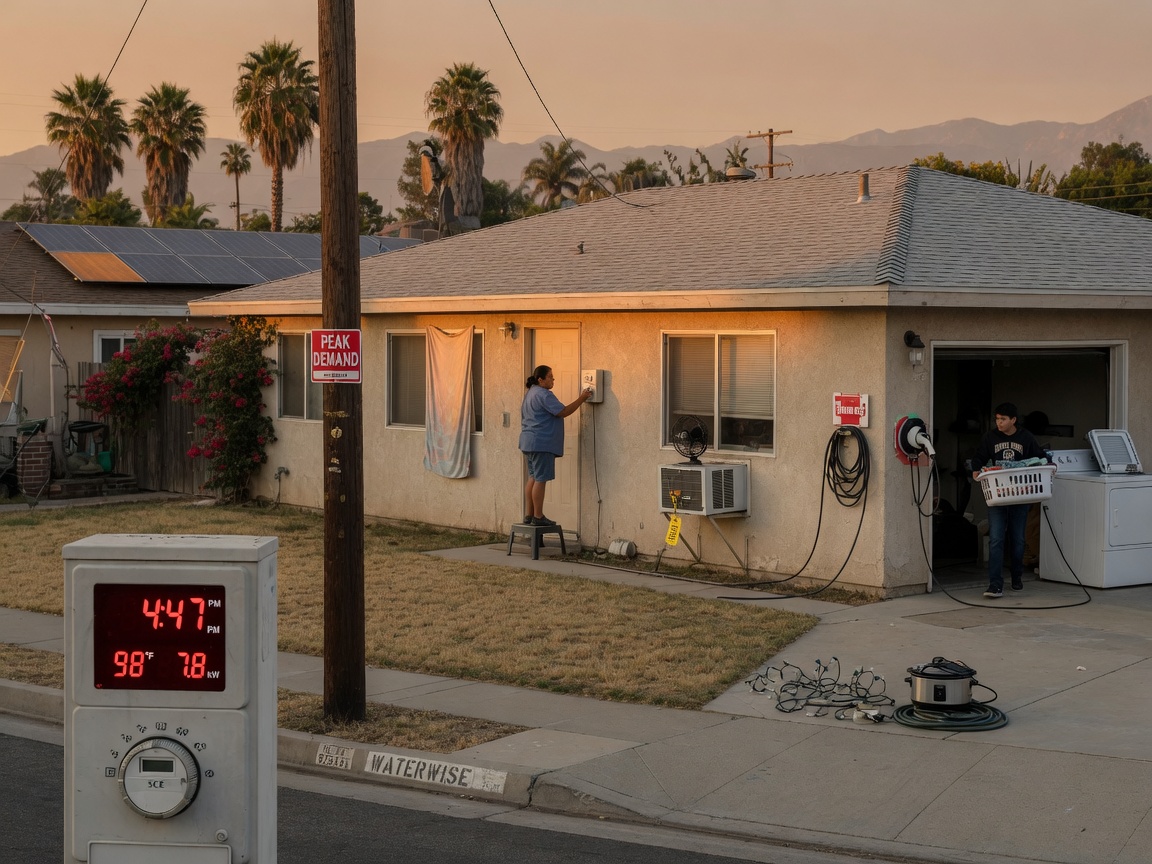
Hemet residents can reduce energy use 20-30% during peak demand hours by shifting air conditioning cycles, delaying pool pumps and running major appliances before 4pm or after 7pm when temperatures in the hot desert climate climb highest. This approach works because Riverside County summers push afternoon loads hard on older electrical systems found in many West Hemet and East Hemet homes built before 1970. The same tactics also help in Ramona Hills where elevation creates slightly cooler mornings but still intense midday heat.
Peak Demand Hours Shaped by Hemet's Desert Climate
Hemet's hot desert climate produces very hot summers that drive air conditioning to run continuously from late morning through evening. Peak demand typically hits between 4pm and 7pm when outdoor temperatures remain above 100°F and homes in neighborhoods like Downtown Hemet retain heat. Mild winters create a smaller secondary peak in the early evening when residents return and turn on lights and ovens. These patterns differ from nearby cities such as Menifee and Temecula because Hemet sits farther from coastal breezes and experiences more rapid evening cooling once the sun drops behind the hills near Diamond Valley Lake. Understanding these daily swings lets homeowners time loads around actual weather rather than generic advice. Pre-1970 homes often lack the insulation and modern panels needed to handle sustained high loads, so timing becomes even more critical in those properties.
Shifting Air Conditioning and Major Loads
Start by raising the thermostat 3-5°F during the 4-7pm window and using ceiling fans to maintain comfort. Set programmable thermostats or smart controls to pre-cool the home between 10am and 2pm when rates are lower. Delay dishwasher, clothes dryer and oven use until after 8pm or run them in the early morning. In West Hemet and Ramona Hills, where many homes have pools, shift pump timers to run between midnight and 6am. These changes cut demand without sacrificing comfort because the desert climate cools quickly after sunset. Track usage for two weeks to confirm the reduction before making further adjustments.
Handling Older Homes and Panel Limitations
Many homes in East Hemet and near the Hemet Museum still rely on 100-amp or 150-amp panels that were adequate when built but now struggle under modern loads. Checking for outdated wiring in pre-1970 Hemet homes helps identify circuits that overheat during peak hours. An electrical panel upgrade allows better load management and supports efficient appliances without tripping breakers. In Ramona Hills, where terrain can affect service drops, older wiring also increases resistance and heat buildup. Addressing these issues reduces wasted energy and prevents nuisance outages during the hottest afternoons.
Monitoring Results and Seasonal Adjustments
Install a whole-home energy monitor or review utility interval data to measure actual peak reductions. Compare July and August bills before and after changes to quantify savings. During mild winter months the same scheduling still helps but the savings window narrows because heating loads are smaller. Revisit settings each spring before temperatures climb again. These steps keep usage down consistently across Downtown Hemet, West Hemet and surrounding areas without requiring new equipment in most cases.