
2026-08-19 · Frank Ramirez
Navigating City of Hemet Electrical Permit Requirements
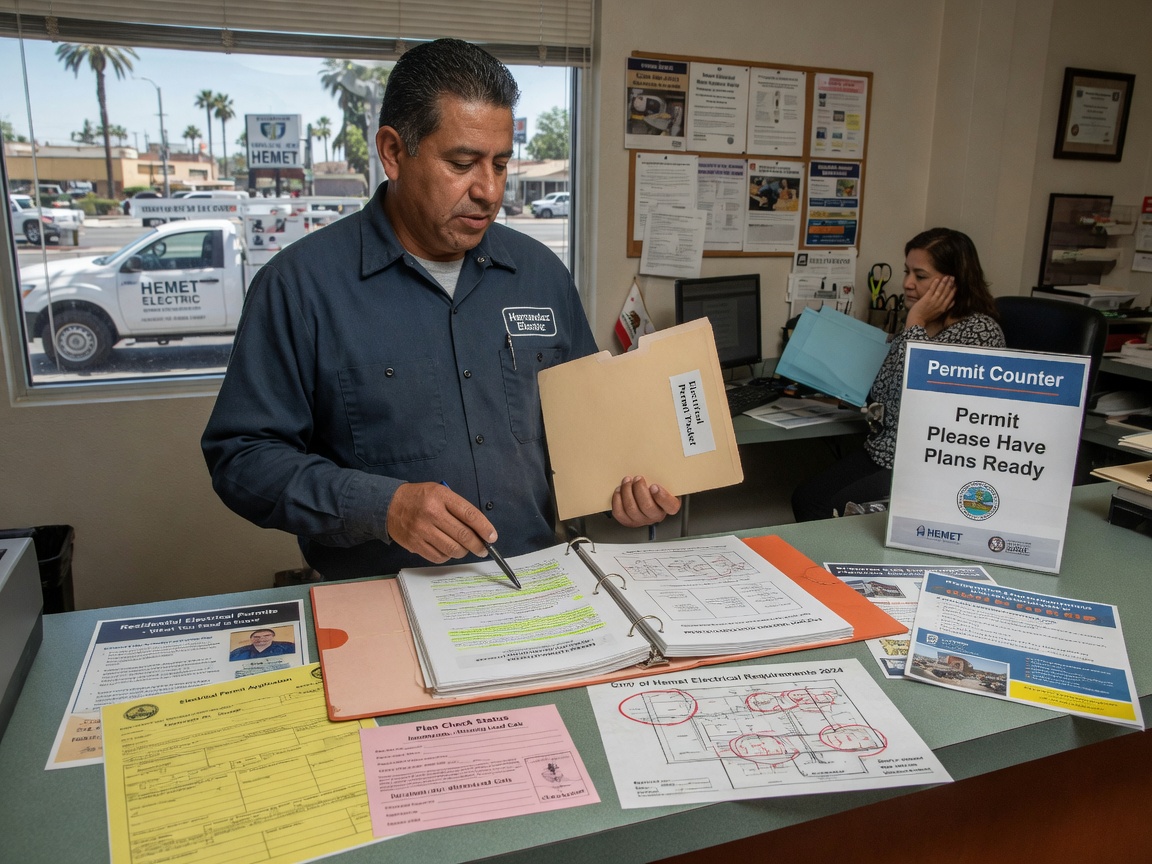
The City of Hemet requires electrical permits for any new wiring, panel changes, or circuit additions that alter the existing system. Applications go through the Building Division at City Hall, and work cannot start until approval is granted.
When Electrical Permits Are Required in Hemet
Most projects that involve running new circuits, upgrading service panels, or installing dedicated lines for heavy loads need permits. In pre-1970 homes common in Downtown Hemet and West Hemet, adding outlets or replacing knob-and-tube wiring almost always triggers review because the original systems lack capacity for modern air conditioning demands. Hot desert summers push electrical loads higher, so inspectors check that new work can handle peak usage without overload. Even outdoor lighting or EV charger circuits in East Hemet or Ramona Hills fall under permit rules when they connect to the main panel. Skipping this step can halt a sale or insurance claim later.
How to Submit a Permit Application
Residents start by downloading the electrical permit form from the City of Hemet website or picking it up in person. Plans must show load calculations, wire sizes, and panel locations, especially important when homes sit on the varied terrain near Diamond Valley Lake where soil movement can affect underground runs. The process typically includes a description of the work, site address, and contractor details. After submission, the city reviews for compliance with California Electrical Code amendments used in Riverside County. Approval timelines vary with volume, but applicants should allow time for possible revisions before scheduling the first inspection.
Local Housing and Climate Factors That Affect Permits
Hemet's housing stock includes many homes built before 1970 in areas such as Ramona Hills, where aluminum wiring or undersized panels are still found. These older systems require permits for any upgrade because inspectors verify grounding and capacity for today's appliances. The region's hot summers increase air conditioner runtime, so permit applications for panel upgrades often need documentation showing the new service can manage sustained high loads. Mild winters reduce some heating demands, yet sudden temperature swings can stress connections, making proper permitting and inspection critical for long-term safety. Soil conditions around Westfield Mall and near the Ramona Bowl also influence trenching requirements for outdoor circuits.
Related Code Updates Homeowners Encounter
Projects that touch kitchens or laundry rooms frequently intersect with GFCI rules, and readers often continue to Meeting GFCI Code Rules in Hemet Kitchens and Laundry Rooms for specifics. Similarly, homes with aging wiring benefit from checking Checking for Outdated Wiring in Pre-1970 Hemet Homes before submitting plans. When safety inspections are part of the scope, Electrical Safety Inspections outlines what inspectors look for during the permit process.
Working with Local Contractors on Permitted Work
Owner-operated companies familiar with Hemet's neighborhoods understand how to prepare documentation that satisfies city reviewers on the first submission. They coordinate inspections around the hot summer schedule when crews prefer early morning starts to avoid peak heat. For larger jobs such as whole-home rewiring, contractors pull the permit in the homeowner's name and keep records of every inspection tag. This approach keeps projects moving smoothly across service areas that include nearby San Jacinto without delays from incomplete paperwork.